
Safety management

Management of emergency exits and evacuation of the public

In the event of a fire or any other situation requiring the evacuation of a building, the management of emergency exits is a key factor in ensuring the safety of the occupants.

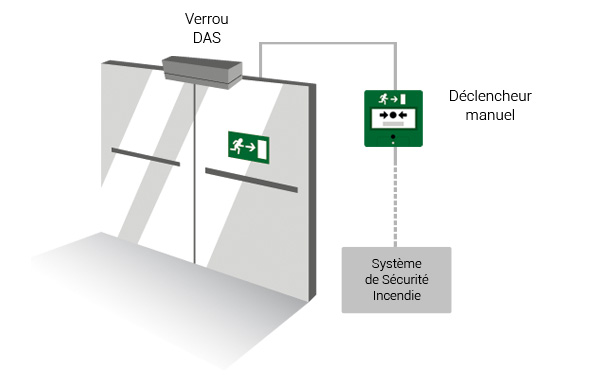
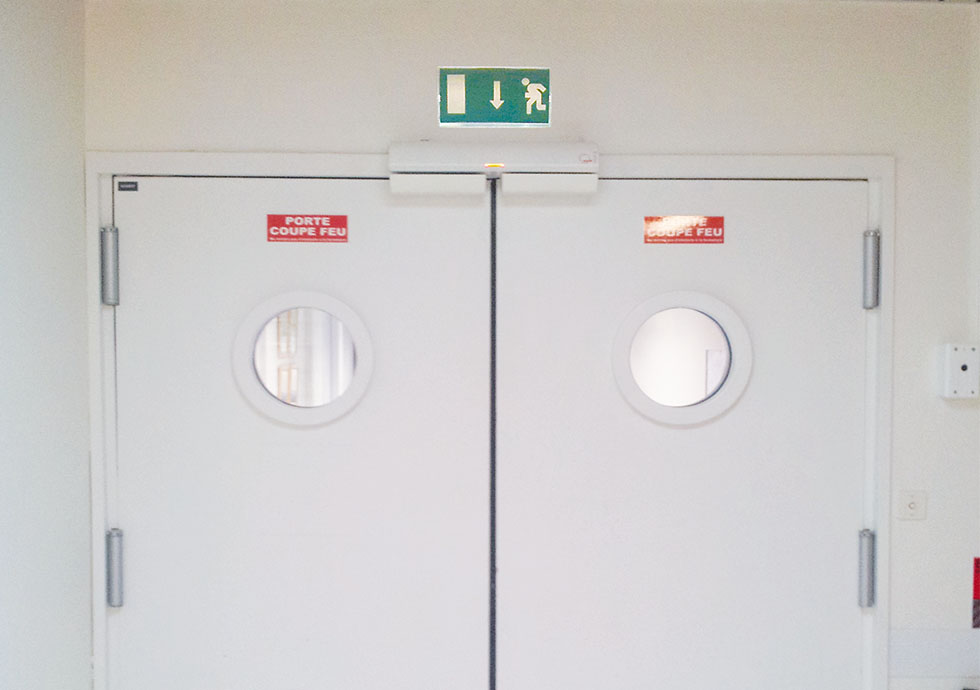
It ensures that emergency doors open automatically when the evacuation signal is triggered, and facilitates the movement of people by allowing manual opening of one or more emergency exits depending on the events that occur.

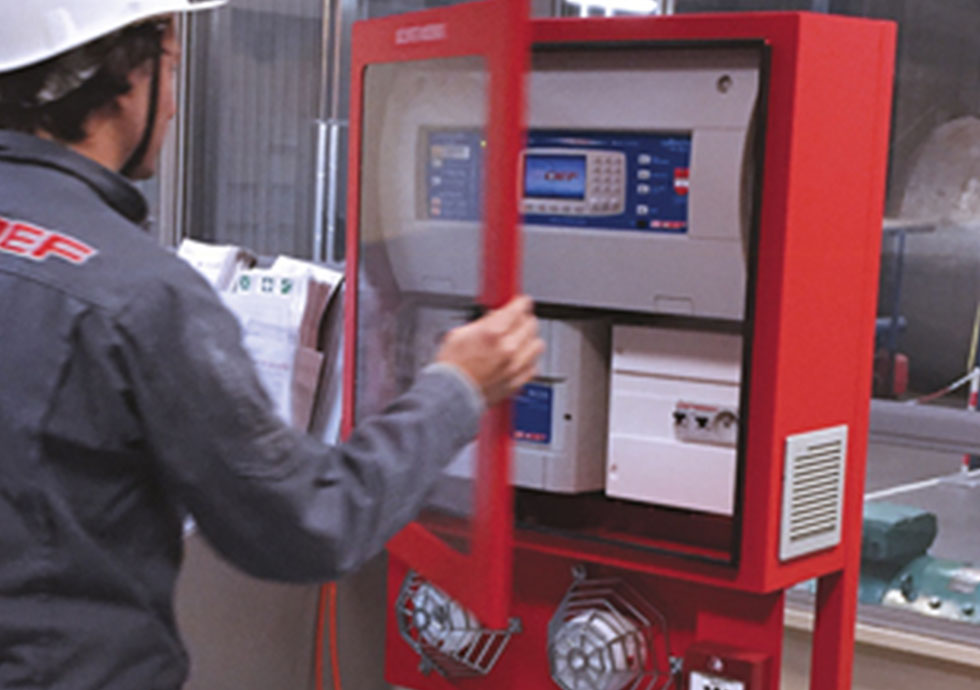
At DEF, emergency exit management relies on interconnected equipment (vacuum locks, door assemblies, control panels) that is integrated into the Fire Safety System to ensure precise, reliable control that complies with current standards.

UGCIS A
  • Opening the exits
  • Safe evacuation
  • Flow management
gestion issues secours

How does the emergency exit unlocking mechanism work?

It relies on electrical and electronic systems connected to the fire safety system. When a fire is detected, the control and signalling equipment panel sends a “fire” signal to the fire safety control centre, which automatically executes a safety protocol that includes: CMSI incluant :

  • The activation of the evacuation signal,
  • le the unlocking of the emergency doors, the illuminated signage for evacuation routes, the opening of the vacuum locks or electric locks (to me, this is a repeat with the isolation management), the management of the zoning of risk areas,
  • la ,
  • l’),
  • la
  • the smoke exhaust management of isolated areas,
  • le retour en position sécurisée après levée d’alerte.

the return to a safe position after the alert has been lifted. The systems can be controlled manually from the alarm management units or integrated into a centralised monitoring system for multi-site management. pilotés manuellementintégrés à multi-sites.

Devices that comply with French standards

The systems are designed to ensure occupant safety while meeting security requirements during normal operation: controlled locking, anti-panic devices, and integration with access control.

Why is it important to ensure the secure management of emergency exits?

The management of emergency exits must ensure both the safety of occupants in an emergency and access control during normal operations.

Risk covered Operational benefit
Coordinate the exits with the fire safety system
Delayed or out-of-sync door unlocking
Automatic opening of exits as soon as the fire alarm is triggered
Ensuring the safety of occupants
Blocked or invisible pathways
Ensuring that evacuation routes remain accessible, clearly marked, and safe at all times
Ensure regulatory compliance
Failure to comply with public access building requirements and the Labour Code
Compliance with evacuation and safety requirements
Maintaining operational safety
Uncontrolled access outside of emergency situations
Secure access control during normal operations, without compromising evacuation procedures
Facilitate maintenance and monitoring
Undetected defects, lack of traceability
Equipment monitoring, rapid diagnostics, and event tracking
:

Emergency exits: a major operational challenge

DEF audits and feedback show that poor management of emergency exits remains a common cause of noncompliance, with a direct impact on occupant safety and the operator’s liability.

Automated management that is regularly tested and maintained is now a key driver of compliance and risk reduction.

Need help?
  • TEST12

    Decree of 25 June 1980

    Fire safety regulations for public access buildings (Articles CO and MS).

    Decree of 25 June 1980
  • TEST12

    Labour Code

    Articles R4227-1 to R4227-29, concerning evacuation routes.

    Articles R4227-1 to R4227-29
  • TEST12

    Building and Housing Code

    Article R.123-4, which requires that emergency exits remain unobstructed in the event of an emergency.

    Article R123-4
  • TEST12

    NF EN 13637 Standard

    Defining the requirements for electrically controlled output devices.

    NF EN 13637 standard

Key figures

Data illustrating the importance of emergency exits

These figures underscore the need for coordinated and automated management of emergency exits in any fire scenario.

  • 35 %
  • of fire victims due to difficulties in evacuating 
  • 68 %
  • Compliance rate observed in the initial audit 
  • less than 5
  • this is the average time it takes for the fire safety system doors to unlock automatically. 
  • + 40 %
  • efficiency gains from coordinated evacuation 

Your sectors

Technology tailored to each of your constraints

Every sector has its own constraints, risk levels and regulatory requirements. DEF designs fire safety solutions that adapt to any environment, ensuring performance, compliance and business continuity.

Discover our solution

See all news

Request customised support

DEF offers personalised support at every stage of your fire safety project.
Talk to an expert

DEF Assistant

DEF Assistant

Let’s talk about your project

The assistant is typing…

Answers generated by artificial intelligence from the DEF website’s content: please check important information with our teams. Do not share personal information.